


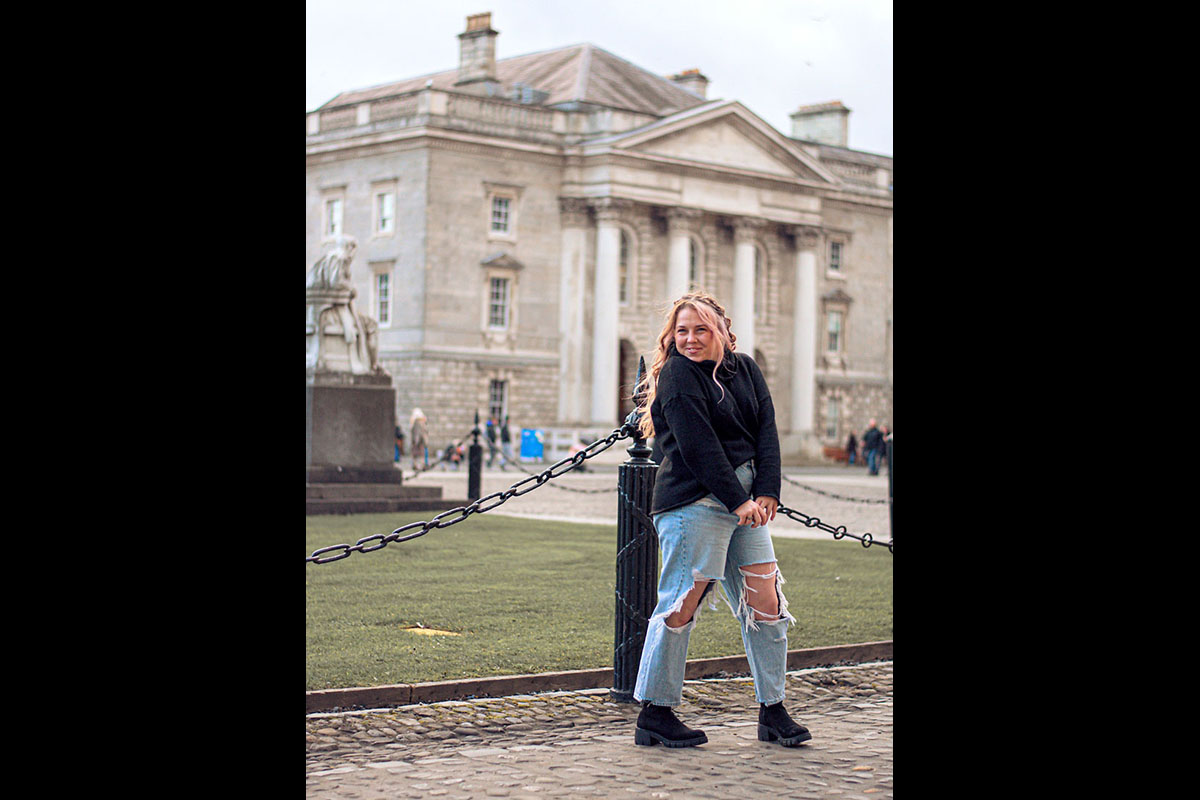
Clarksville, TN – April is National Poetry Month, a time to honor the poets who shape our world with their words. Poetry is more than just language—it is an experience, a way of seeing, and a means of healing.
As Mary Oliver stated, “Poetry is one of the ancient arts and it begins as did all the fine arts, within the original wilderness of the earth.”
What better way to celebrate than by highlighting one of Clarksville’s own, a poetess and artist who has traveled the world and embodies the spirit of storytelling in her every word—Hannah Charles.
Listening to Hannah is like stepping into a poem.
Her life is like a series of verses interlaced with experience, travel and reflection. Her journeys, both in art and in life, could mirror the paths of legendary poets—those who have captured the human spirit and reshaped the cultural landscapes of their time.
Hannah finds beauty and meaning in the places she visits, the people she meets and the stories she gathers along the way.
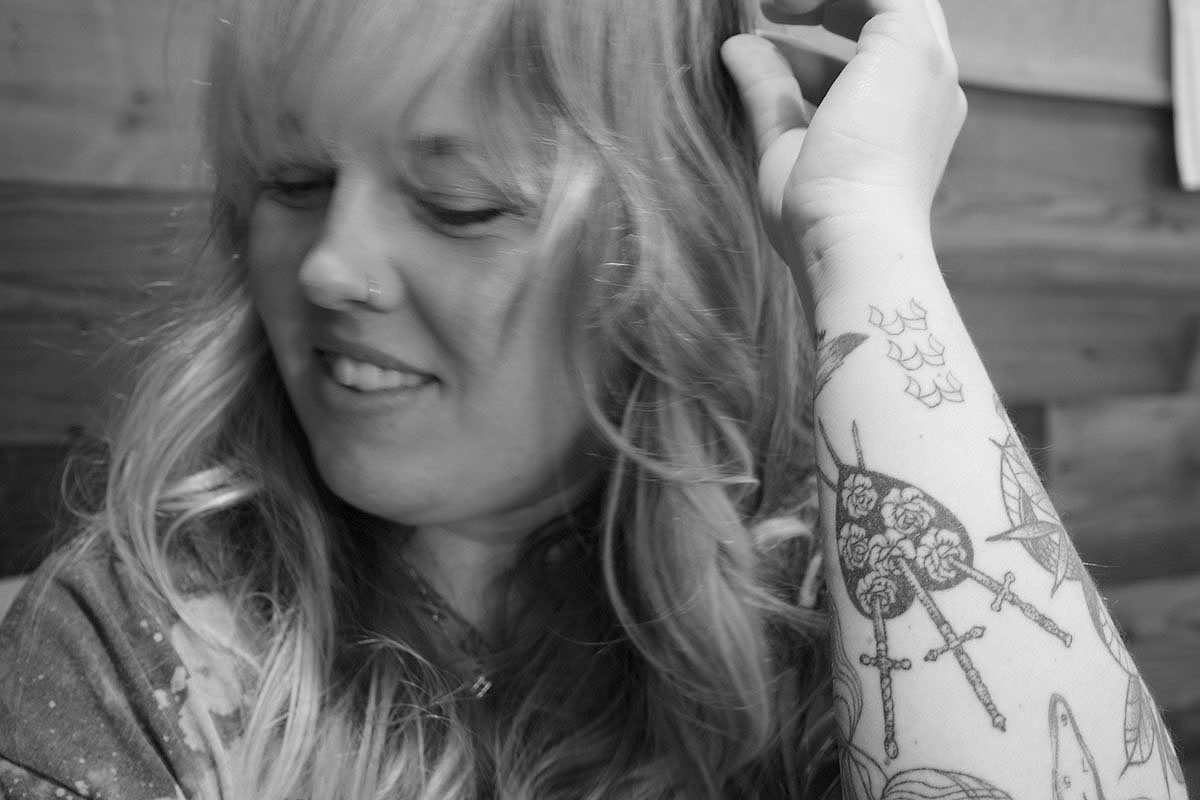
Her love for writing began early. “I went to a fine art and grammar school in Chicago, kindergarten through eighth grade. We always did writing, art, dance and music. … It was a public school, which was awesome,” she recalls. These formative years nurtured her creativity, making poetry and art integral parts of her life.
But for Hannah, writing was never just about expression—it was about release. “When we don’t talk about things, they get stuck in the body. … you can get sick. … whether I say it publicly or not, it’s a huge relief,” she explained.
This resonates deeply with many artists who use poetry as a means of emotional catharsis. Just as Sylvia Plath and Anne Sexton turned their struggles into evocative verses, Hannah sees poetry as a healing force, capable of lifting burdens and making sense of life’s chaos.
The evolution of poetic language captivates her. She loves reading old poetry—how others wrote, appreciating the way other words impacted the world. “There’s a rhythm to it, like a song,” she said. She looks into this classical lyricism and the modern language, much like contemporary poets who blend tradition with innovation.
Her admiration for poetry isn’t just about reading; it’s about understanding the soul behind the words. She researches poets—what they were going through when they wrote. “Sometimes, they’re worlds apart,” and then she went on to explain how the feelings they had could be quite similar and how they transcended time and space through their works.
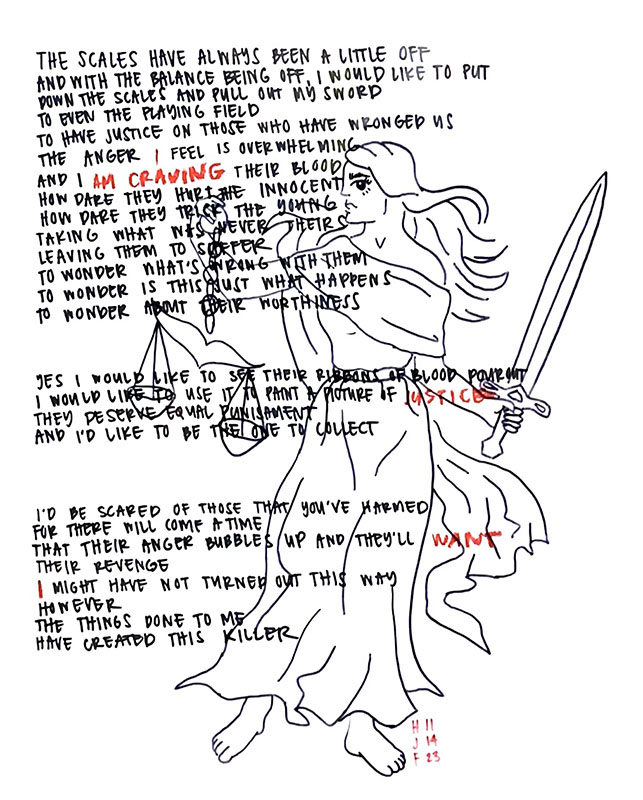
Lord Byron briefly emerged in our conversation, among others.
Poetry is a bridge across dimensions. It connects us with those who came before. There is power in intentional art. “I think projecting could be something beautiful when it comes to art and poetry; … that is quite healing,” she included.
One of the most profound aspects of Hannah’s philosophy is her belief in the responsibility of the artist. “What you put into the world has a ripple effect. … be intentional about what you put out in the world,” she stated.
In a world where words carry weight, she recognizes the importance of using art for connection, healing ,and change—echoing the impact of poets like Maya Angelou, who used her voice to uplift and inspire.
Hannah’s life of travel transforms into storytelling and helps claim her connections to the past, especially in Europe. Her artistic path is deeply intertwined with her trips around the world.
With roots tracing back to German, French, Italian, and Polish ancestry, she has always been drawn to exploring her heritage. “I started researching my genealogy at the library. It’s amazing to see where my ancestors came from,” she shared.
At a young age, she participated in a foreign exchange program with Poland, hosting a student in Chicago before spending time in Warsaw and Kraków. “Her name was Dominica, and she got to stay with me for a month. …We went to a spring dance, ice skating and museums. … It sparked something in me—a desire to always travel and listen to people’s stories,” she said.
That passion has only grown over the years, especially when traveling through Ireland (Dublin, Galway, Wicklow Mountains), Northern Ireland (Belfast), Scotland (Glasgow, Edinburgh & Inverness), London, and many more places.
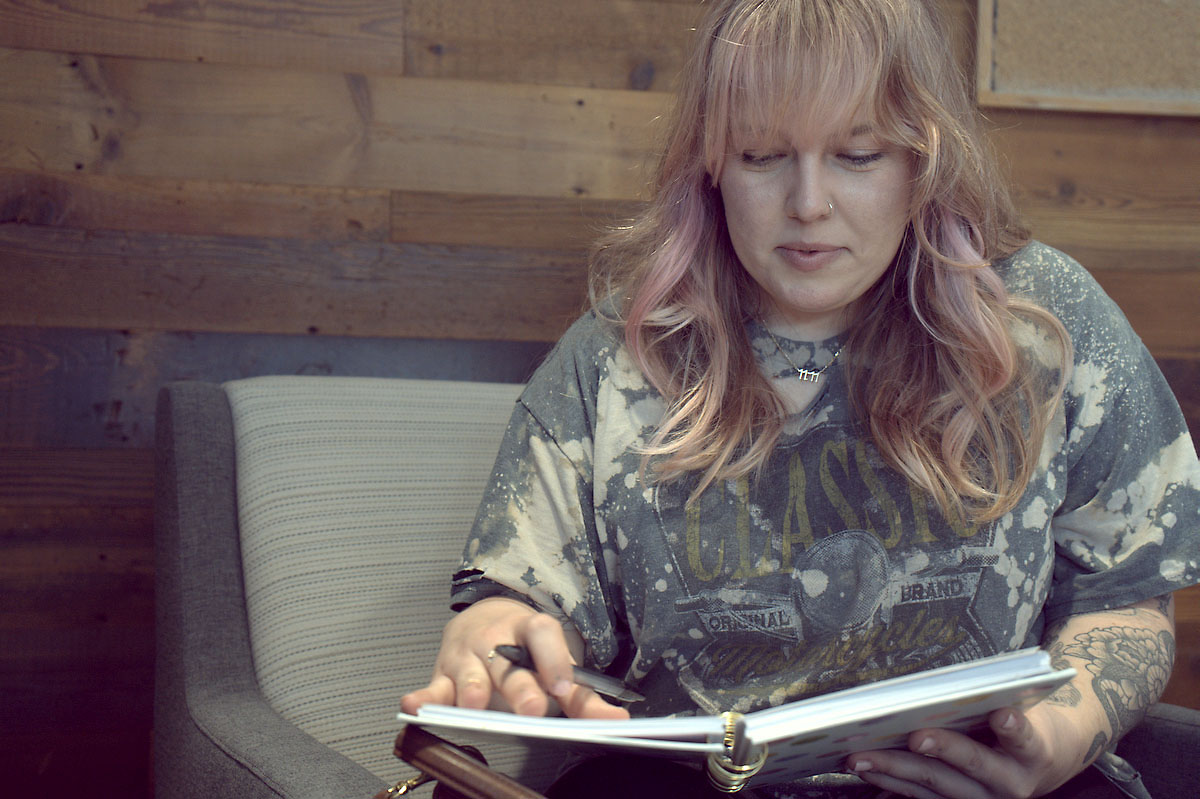
Her 2022 trip to Ireland was another defining chapter. “I stayed in Dublin, got a library card, rented books, and just explored. My friends from here came to visit me out there—it was the most magical long weekend,” she reminisces.
The resilience in her voice is the same that fuels her art—turning even hardship into something meaningful.
Her travels took her farther—Amsterdam for her 30th birthday, Verona for the ‘Letters to Juliet’ experience (Hannah was going through a divorce at the time and she got to write to women who were going through similar struggles), Venice, Florence, and Barcelona.
Each destination left its mark, influencing her poetry. “I wrote a piece while eating alone in Venice. It’s such a romantic city, and I was sitting there with my wine and pasta, writing my sad little poem,” she laughed.
Those moments of solitude became sources of creative inspiration.
Art and business intersect in her life; motivated from a young age to study the latter as her father was one of the many people who lost their jobs during the global economic crisis that originated in the United States in 2007 through 2008.
Hannah originally pursued business and holds two degrees: one in Entrepreneurship and another in Organizational Leadership. She always felt the pull toward creativity but that wasn’t a career choice, especially when one grows up in the South side of Chicago, becomes aware of the high rates of poverty and sees her own parents struggle when she was in high school.
“I love Chicago and I love what it did to me,” she told me.
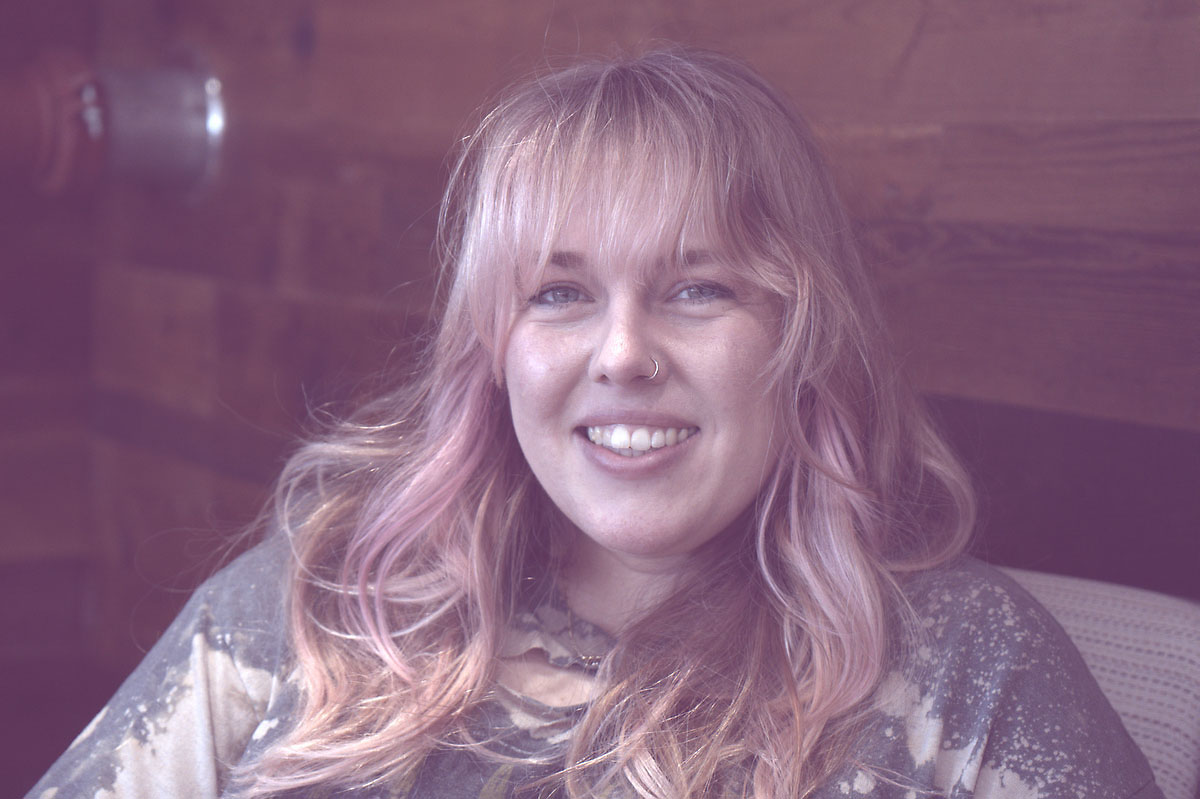
Hannah spoke with great fondness about her time spent in Italy – where her first art class abroad was taught by a German professor. Memories such as this one only fuel her to pursue a degree in art now.
It’s a reminder that creative paths aren’t always linear, but they’re always waiting for us to return.
For Hannah, travel isn’t just about seeing places—it’s about collecting stories “I was sitting at a dinner table in Poland and they were talking about Auschwitz …” she said she listened to families who lived through it.
In Belfast, she learned about ‘The Troubles’ firsthand. “I think history is so fascinating. …It’s important to know and understand these things and write about them,” she said.
Much like poets who document the human experience—like Rainer Maria Rilke, who infused his poetry with his travels across Europe—Hannah is both an observer and a storyteller.
One of the most thought-provoking parts of our conversation was about the idea of home. “When you travel a lot, home isn’t just a place. It’s something you carry with you,” she muses.
For some, home is a single place. For Hannah, a home could be the people she meets, the stories she hears, and the art she creates.
[320leftHannah’s journey is far from over. She dreams of seeing more of the world, writing more poetry, and sharing her experiences with others.
As National Poetry Month unfolds, poets like Hannah remind us that words have power. Whether written in a journal, spoken aloud or shared with the world, poetry is a way to connect—to ourselves, to each other, and to the vast, beautiful world we inhabit.
In the end, what is poetry all about? One could say it’s about capturing life, one verse at a time, discerning what shapes us and what we take forward.


