


Written by Larry R. Richardson
Clarksville, TN – Remember the old cowboy song: “O’ bury me on the lone prairie, where the coyotes howl and the wind blows free.” Well, the coyotes still howl, but not just on the prairies. They are here in Montgomery County, and most counties in Tennessee. Coyotes are our wild neighbors, like it or not.
These four-legged varmints resembling a medium-sized dog were restricted to Mexico and southwestern North America as far back as the Aztec civilization, prior to the 1700s. In fact, the natives named it coyotl. Currently, their range extends from Alaska to Panama to much of the eastern United States and Canada. Yes, they inhabit lands even where there are no roadrunners! Records show they were present in the Chicago area when it was founded in the 18th century, but then disappeared during the next two centuries.
The cartoon character, Wiley Coyote, introduced the species to me as a post-WWII child, when these animals were still restricted to inhabiting the western United States. Until the 1970s, coyotes were known to exist only where cactus grows. However, slowly but surely, Canis latrans began their eastward expansion, adapting to modern civilization’s way of life. A coyote was reported in New York State in 1912, but that was a rare sighting, even if accurate.
Like me, you may have encountered this ubiquitous beast without realizing what you had found. Its secretive habits and initially low populations treated us to nighttime serenades. Wild dogs, we said. Well, partly right. Their tracks in the muddy creek beds or snow are dog-like, too. After all, they are close relatives of the same canine family.
Their presence fills ecological roles once held by wolves and other large meat-eaters. With the extirpation of large carnivores from urban landscapes long ago, the coyote is somewhat of an anomaly, assuming the top tier in the food chain along with bears and bobcats. Most wildlife experts predict that coyote populations will continue to grow because they have adapted so well to man-made habitats.
Ranchers and farmers take drastic action against roaming packs of coyotes, especially during calving season. Poultry can be targets for these furry varmints, too. But, what about encounters in the suburbs? Where there’s food, there may be coyotes!
Suburb incursion into wildlife habitat is inevitable. Who hasn’t seen or heard about night visitors like raccoons, opossums, armadillos, and even day-timers like wild turkey, Canada geese, and whitetail deer? Mark Spurgeon, who lives just off Trenton Road, told me about seeing a coyote recently that tried to make it across the blacktop but succumbed to an automobile bumper. I’ve seen dead coyotes along the road, and you, too, may have noticed a comparable dog-like animal lying on the highway apron. A lady who lives on the south side of town, sent me a photo of a coyote trekking through her February woods. But, don’t be afraid, be aware.
First of all, try not to show fear if you have a chance meeting with a coyote on your property. Remember, these are wild animals, not trained pets. But, they will react similarly to your actions. If you retreat, they will learn that they can gain another inch to their territory. If you stand your ground and maintain control, they will be less likely to return.
Watching wildlife can be an entertaining pastime. However, if you don’t want coyotes around, you can take some actions that may lessen their visits. Consistence and repetition are key in “training” these creatures. Don’t yield your space, say wildlife conflict experts with Fish and Wildlife Departments. Show that your space is not negotiable.
I remember not long ago while turkey hunting, a lone coyote came sneaking up the hillside thinking I was a hen clucking to its mate. When it got close enough, I stepped out of my hiding place and simply said loudly “Boo!” The surprise quickly sank in and the invader sprinted off. I never saw it again, even after repeatedly hunting the same spot. My tone of voice was assertive, not passive, but forceful and clear. Establishing a similar association with intrepid coyotes makes them less likely to linger or return. You may have done the same with a neighbor’s pet.
Speaking of pets, veterinarians see patients whose owners underestimate the risk of allowing small dogs and cats to roam, especially at night. Removing an opportunity to rush off with a prize, helps deter an aggressive coyote. Stay with your pets, even if in a fenced backyard. Motion detection lights might be good insurance.
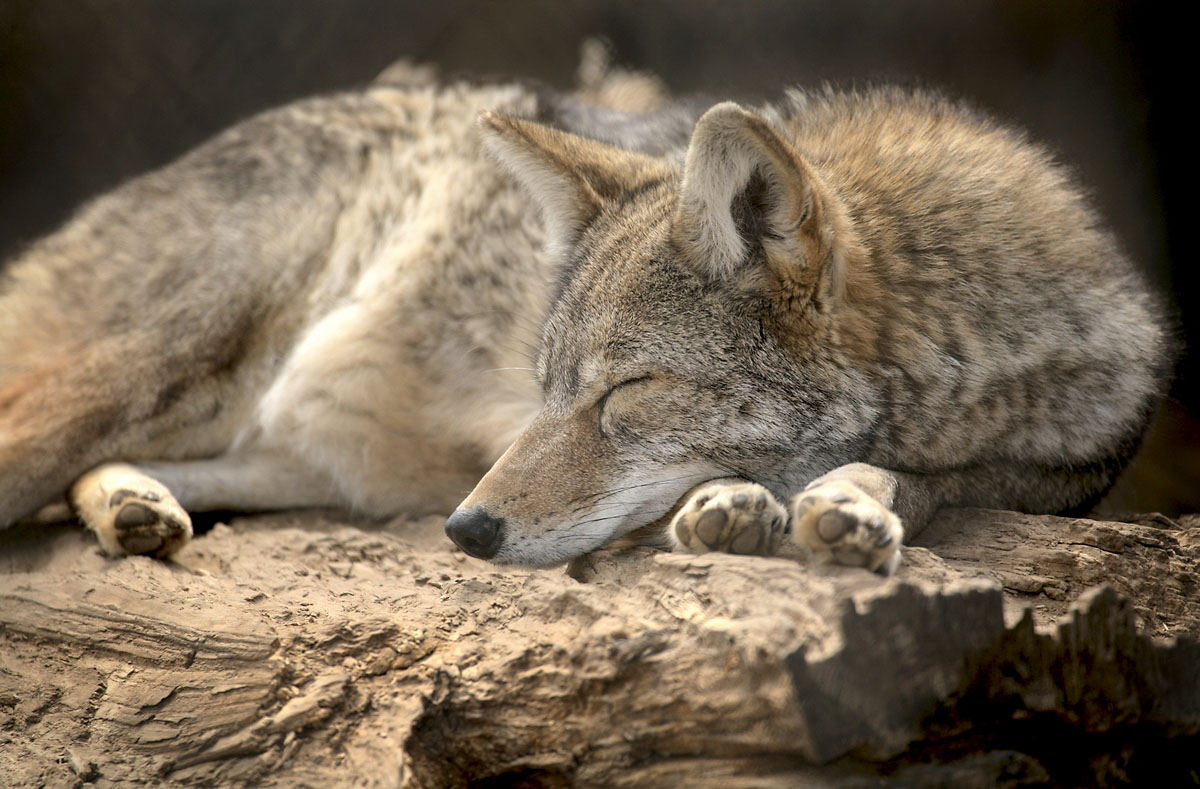
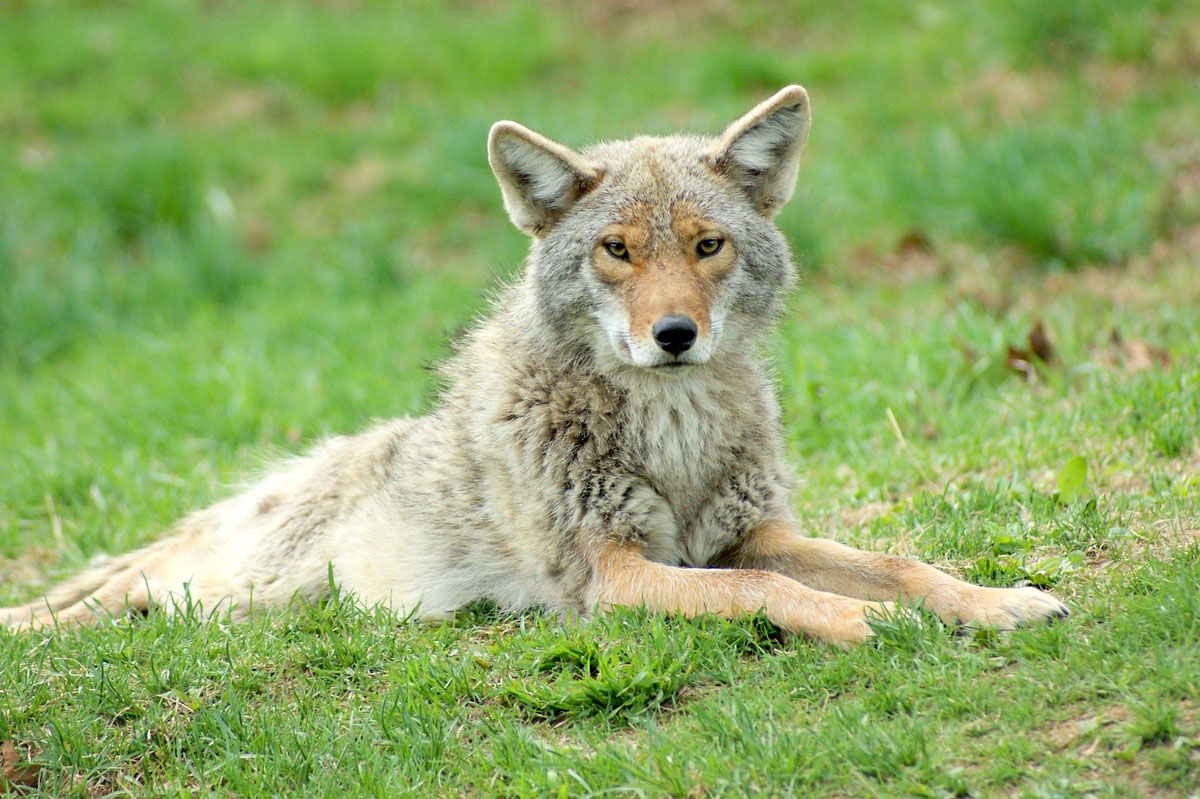
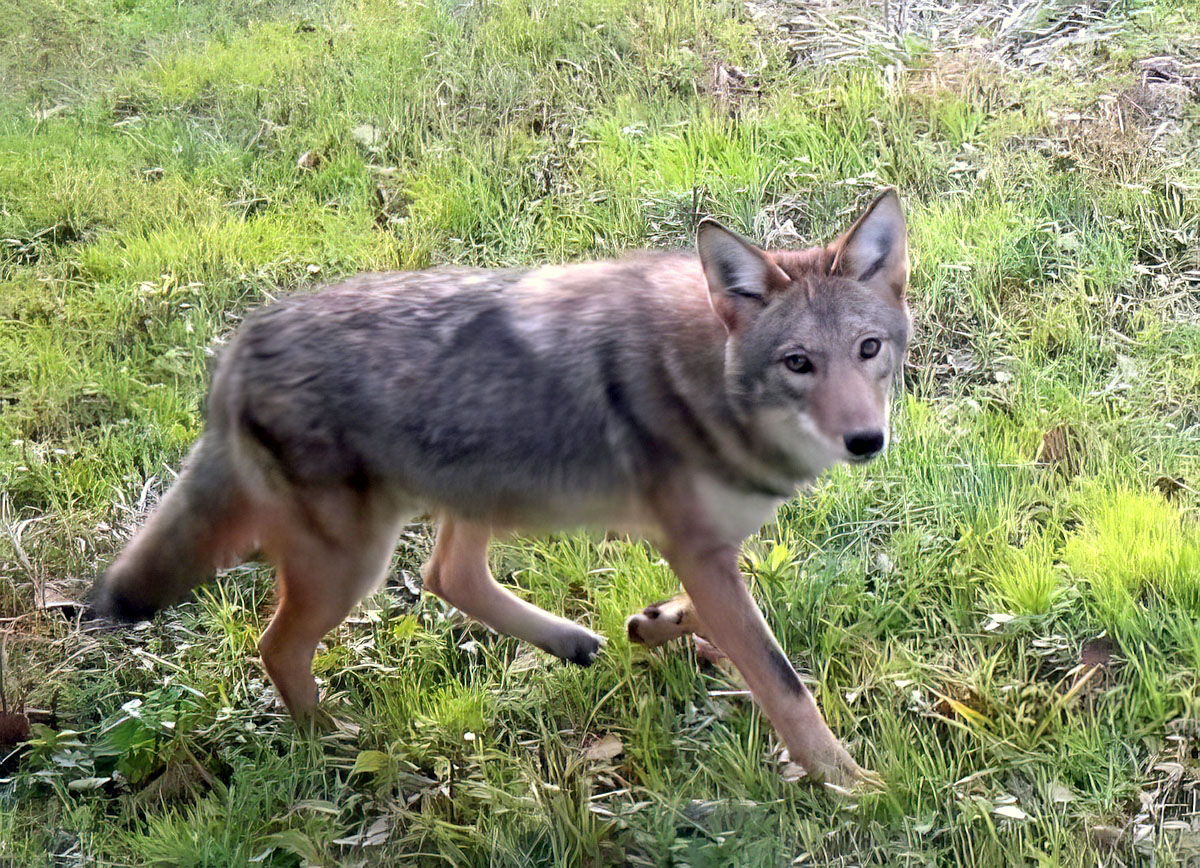
The Tennessee Wildlife Resources Agency (TWRA) describes coyotes as large, dog-like animals with long, slender legs and a bushy tail. It has a narrow muzzle and long, pointed ears. While male coyotes in Tennessee can weigh between 21 to 41 pounds, females average about 25 pounds. Adult coyotes average 45 inches in length. Although the coyote is like a dog in some ways, its wary movements clearly distinguish it from a dog. It slinks as it moves with its tail held low and head erect. The gait of a coyote is unmistakable.
The color of coyotes varies with extremes from nearly black to nearly white. The sexes are colored alike. Typically, the upper parts of the coyote are brownish-yellow or brownish- red with some gray mixed with broadly tipped black outer hairs. The under parts are light buff, and the forelegs are brownish-yellow or brownish-red, sprinkled with some white. Forelegs display a streak of black on the front. The throat and belly are white to pale gray. When in doubt, go to the internet or your favorite wildlife books.
Just remember, you don’t need to be a seasoned nimrod to match wits with a coyote.


