


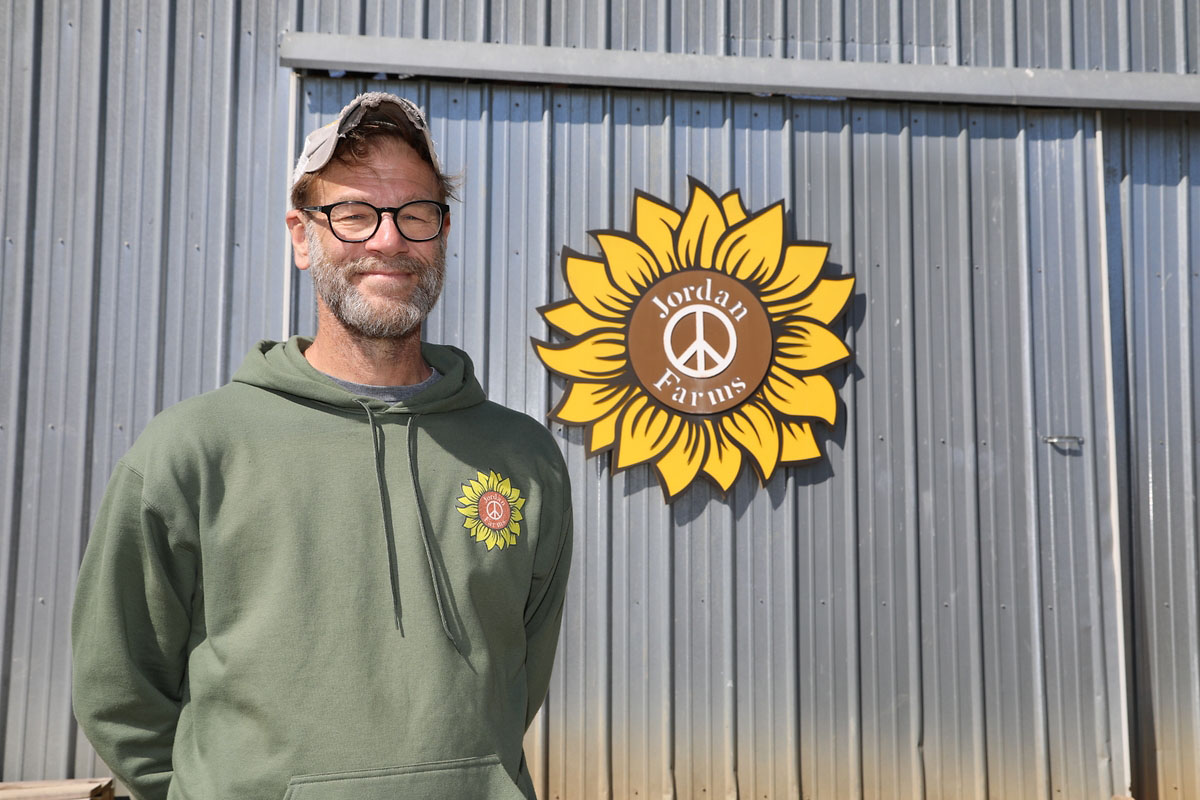
Clarksville, TN – Charley Jordan of Jordan Farms has become a fixture at local open-air markets, where he brings a beautiful variety of fresh-cut flowers all throughout middle Tennessee’s growing season. And though most of us start to see colorful blooms in late April or early May, Jordan’s work begins much earlier than you might think.
At his farm, he has several areas already prepped for this year’s crops. The first area we came to, as we walked around the farm in mid-March was a flower bed covered in landscape fabric that contained assorted perennials.
“We’re starting to see sedum, hyssop, and liatrus, perennials that come back on their own,” Jordan said. “Sedum is one of only two succulents that can withstand sub-freezing temperatures. Hyssop is a big pollinator. I have eight or nine beehives on the property, and my friend has ten. There are probably 5,000 bees in each hive.”
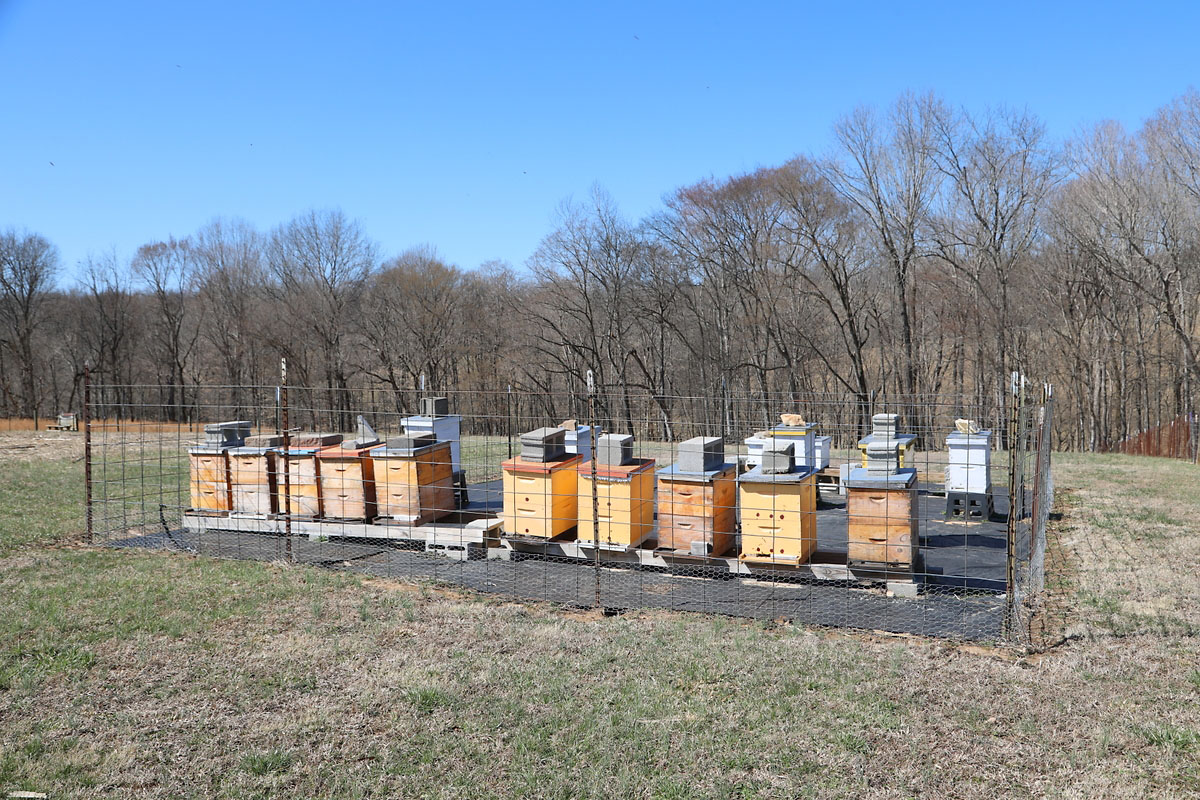
In addition to cut flowers, Jordan Farms produces honey, and grows sunflowers. At certain times of the year, guests are welcome to the farm to cut their own flowers.
“Yes, we produce honey, and I grow sunflowers out here, too,” Jordan said. “We plant different types, including one that produces a lot of pollen and nectar. The ones that produce a lot of pollen are not ideal for cutting. We plant the pollinator sunflowers out here past the hoop house.”
Jordan says what the bees consume influences the quality and flavor of the honey, as well as its anti-allergen properties.
“We have maple trees which are producing right now, tulip poplars will be next,” Jordan said. “Just south of my property is the Cumberland River, and all our bees go straight toward the river. It’s the bee freeway. You can sit out here in the summertime and just watch them.
“We have events all the time. We do therapeutic horticulture events and farm visits. The NWHS FFA comes out every couple of years. Then we have groups come out and do pick-your-own flowers. People can pay a fee and then pick a bouquet for themselves.”
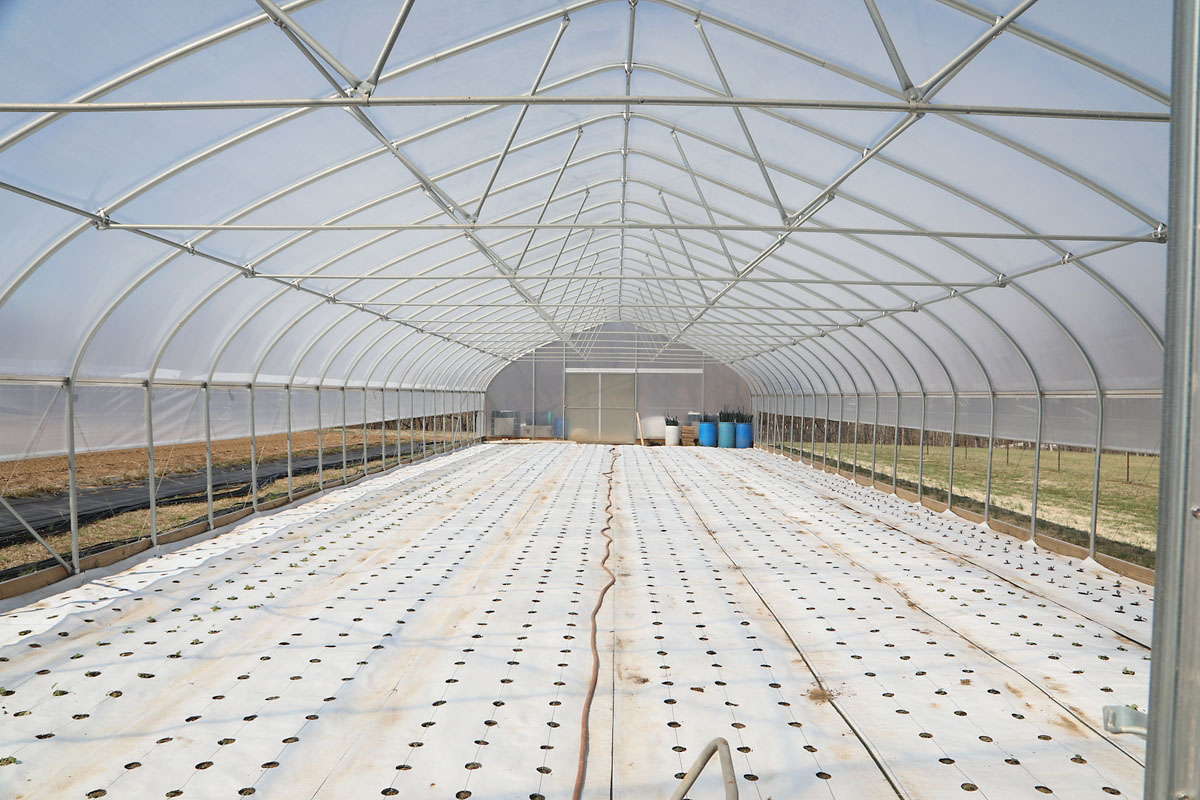
In the hoop house right now are Mother’s Day Market flowers. He tries to raise enough to hold him until the first outdoor-grown flowers come in, which is usually around the third week of June. So with luck and a lot of planning, the hoop house produces enough cut flowers to keep him in stock through the first couple of months of market season.
“In here (the hoop house) we have our early spring flowers that don’t do so well in the hotter part of the summer. I have snapdragons, flowering kale, anemones delphinium, lots of different stuff. A lot of this will continue to produce into June, but it gets really hot here in the summer.”
He is trying a different color of landscape fabric this year, white, to help reduce the temperature and keep the roots cool. He has monitors to keep track of the temperature in the hoop house.
“This is our fifth year in the business,” Jordan said. “We’ll be planting goldenrod and campanella, a variety of very different flowers. I try to grow lots of different flowers for our customers.”
Hoop house planting started in late February. Jordan likes to start from plugs which he gets from a nursery. “Seeds are hard, and I’m basically a 1-Veteran show. I work with a plant broker. They search their growers for what I want, certain types of snapdragons, etc.
“Everything that is planted here now was planned and ordered last year. I have all my ordering done by August for the next year. Products start arriving in late February. 2025 is already done in some respects. I’m working on 2026, now. I’m doing research, basing next year’s crop on my customers’ desires, likes and trends from all throughout the United States. I like to see what the East Coast and the Southeast are doing, especially the Southeast. The variety that I plant, tend to grow the best here.”
Jordan is looking at growth characteristics, profitability, and all the little things that can help him survive until the next season. “I want to keep this going, so there is a lot of research that goes in to it. If I plant 270 flowers that go bad, that’s bad. Each plant has to produce a certain dollar amount to make this work. If certain plants can’t do that I pull them, and try to figure out something else.”
The hoop house should have blooms by the first of May. The first Downtown Market this year is on May 10th, just before Mother’s Day.
“If the markets make a shift in start times I have to take that into account when I’m planning and planting,” Jordan said. “This year, Old Glory Distilling Co. is starting a new market on Thursdays. Their first market this year will be on the 8th of May. I have to ensure that I have enough inventory for opening day. That’s just a few weeks from now. It’s crunch time, and sometimes I’m like, oh no.
“This year, we’ll start with spring florals, spring colors, pinks, whites, light blues, – snapdragons, delphinium, flowering kale, lupine, a nice variety.”
Jordan tries to get two years out of some of his hoop house plants, but this year he is starting with all new plants. “Yep, it’s a blank slate. We added compost to it, added lime, checked the PH, did soil samples, then went ahead and added a little fertilizer, not a lot, mainly nitrogen.”
He says the ground inside the hoop house is similar to an arid Afghanistan high-desert plateau environment.
“I haven’t had natural rainwater on that ground in five years,” Jordan said. “The ground outside the hoop house is so different. This is all a challenge every day. I love it. Every day, I come out here and test the soil and monitor the temperatures. Sunflowers start after April 18th. We do it a little later to avoid the last frost.”
Jordan plans to plant 1 to 1-1/2 acres of sunflowers for this year’s crop. He also showed the spot for the outside cutting beds.
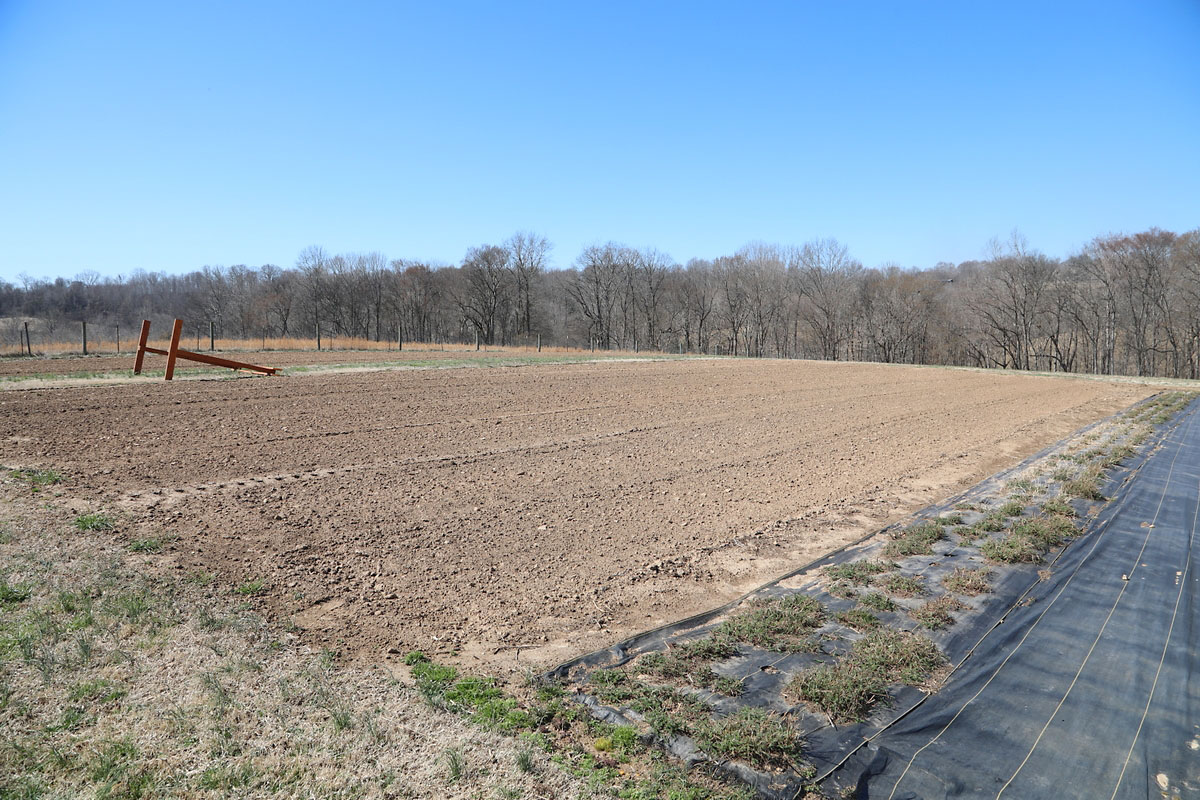
“The ground is almost ready,” Jordan said. “Around April 1st we’ll lay black landscape fabric. This soil has been amended, fertilized and tested. It’s probably ready to go. I need to run one more till on top, a light cultivation, maybe an inch deep.
“Here, we’ll plant summer floral heavy hitters – zinnia, lisianthus, celosia Queen Anne’s lace, statice – there is so much. And, there is a lot of science that goes into placement. Being that I use mono-cropping, I shift things around each year.”
He talks about the layout, the fabric, the spacing, He has created these parameters with ease and safety in mind. “These flowers will produce until Labor Day,” Jordan said. “I don’t do any succession planting, except maybe for the sunflowers, on these two fields. I check brix levels, etc, and work hard to keep them going all the way through August. My business really runs Mother’s Day to Labor Day. I make use of this entire 5+ acre area. We will also be doing some donations for Manna Cafe and others this year.”
He started this as a side business in 2001 while still on active duty in the U.S. Army. “I retired in 2017,” Jordan said. “In 2018, this was established as Jordan Farms. I started with horses, which turned to cows. I bought an extra twenty acres, which I sold after the pandemic, at which time I concentrated all my efforts on the flowers.
“Getting out of the Army can be a struggle. Agriculture is my jam, there are therapeutic parts, and there is solace, and it gives me something to do. I have fun with it. It’s way more than forty hours a week. We’ll be in four different markets this year. Its mainly my gig, but my wife Christine helps me out quite a bit.
“Pointers – first thing, make sure your soil is good, amend it, get it right. Then, look for sunlight, how is your property oriented? Most flowers like a lot of sun. Start your flowers by March or early April, then plant them after the first frost, usually mid-April. You can scour the internet for growers, or just go to Lowe’s, Home Depot, Rural King, etc.”
You can find Jordan Farms on Facebook at @jordanfarmsTN. For information on location, events, hours of operation and more, go to www.JordanFarmsTN.com


