


Written by Christie Crawford
Clarksville, TN – There are nativity scenes and then there are nativity scenes. I’ve seen gorgeous miniatures from olivewood, marble, porcelain and paper mache, inflatables, gargantuan depictions, and live outdoor scenes. I was even able to view the famous Moravian display called a putz in Bethlehem, PA.
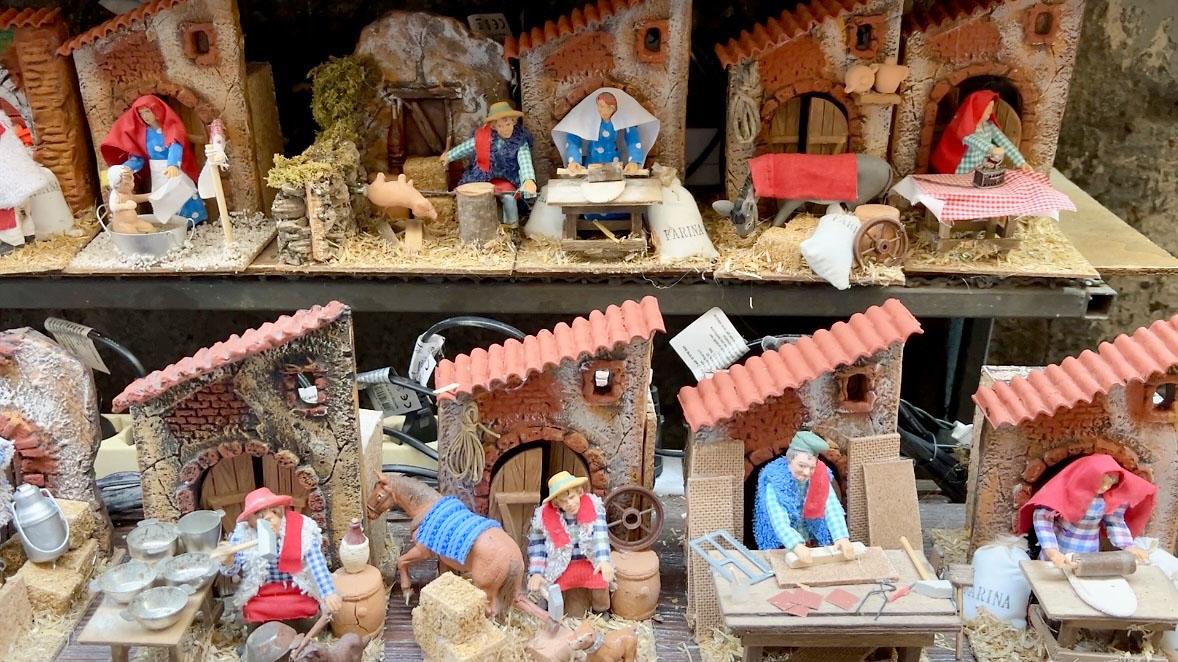
I had heard about these famous nativity carvers from Italy that have gone back hundreds of years, but nothing was to prepare me for the cleverness, workmanship and sheer awe when I went to Naples in 2022 to view the presepi (Italian for nativity scenes) along the Via San Gregorio Armeno known as Italy’s “Christmas Alley”.
This tradition of making nativity scenes dates back to the 13th century during the time of St. Francis the Assisi. Legend has it that this most beloved saint created the nativity scene in order to embellish the story of Christmas. His first version had only the baby Jesus, Joseph and Mary, plus a donkey and an ox. Subsequent to his death, other Franciscan friars added the shepherds, angels, and three kings we typically see today.
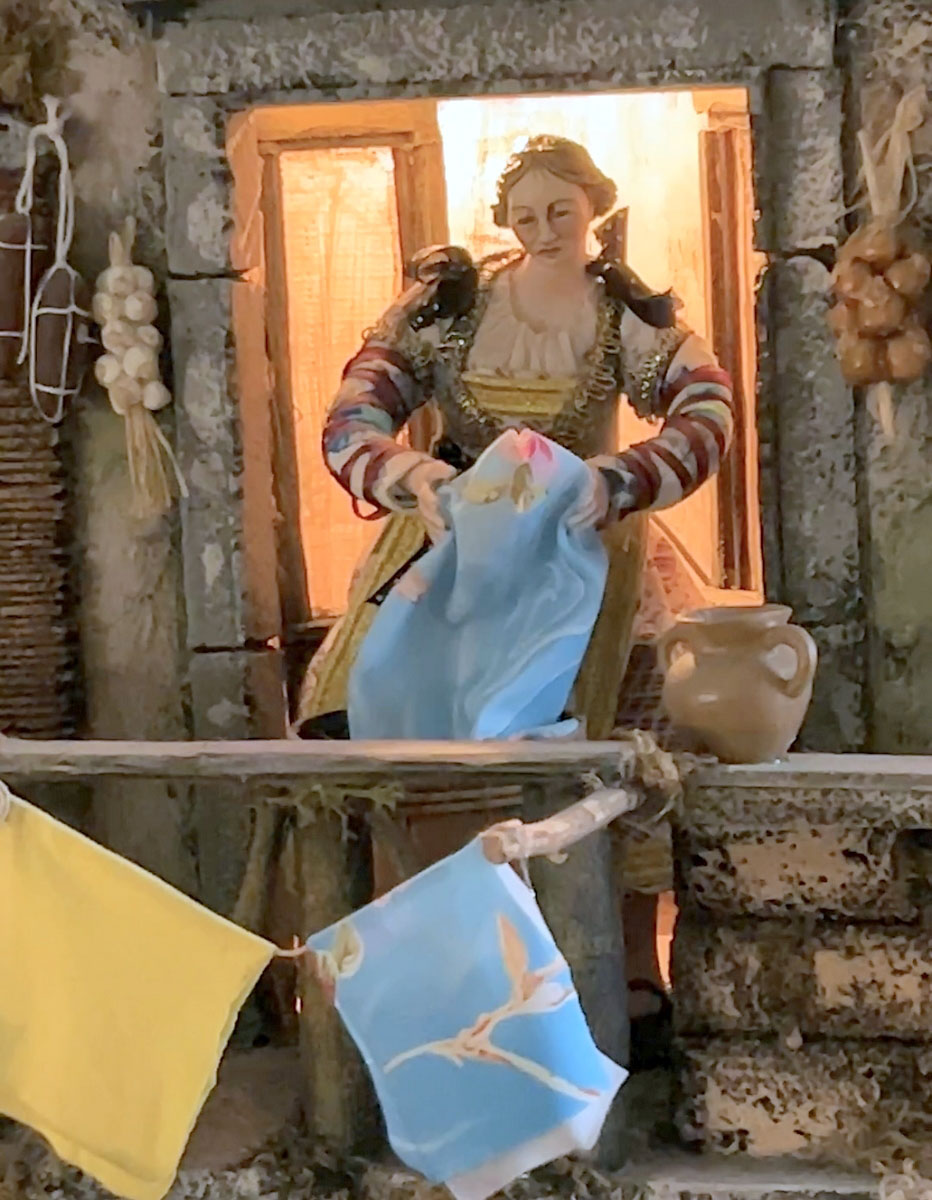
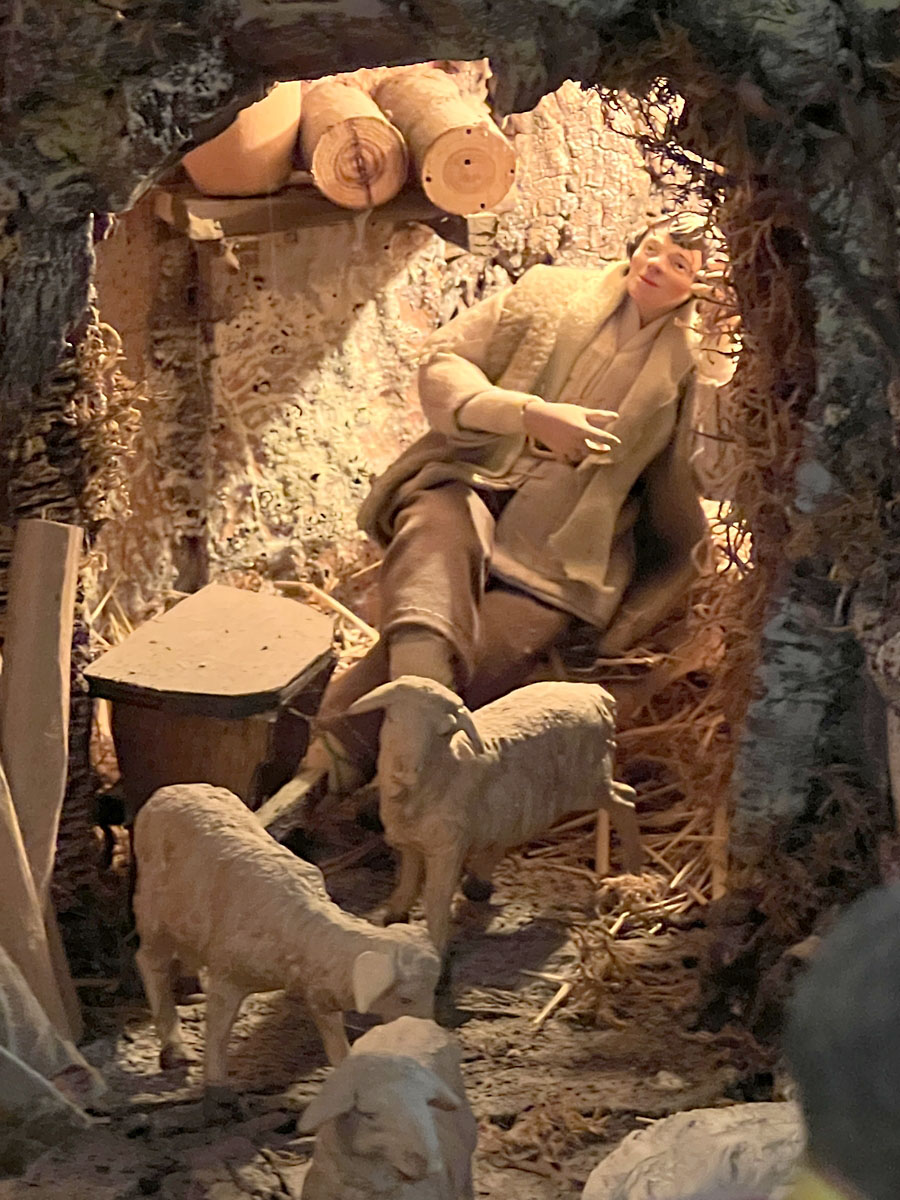
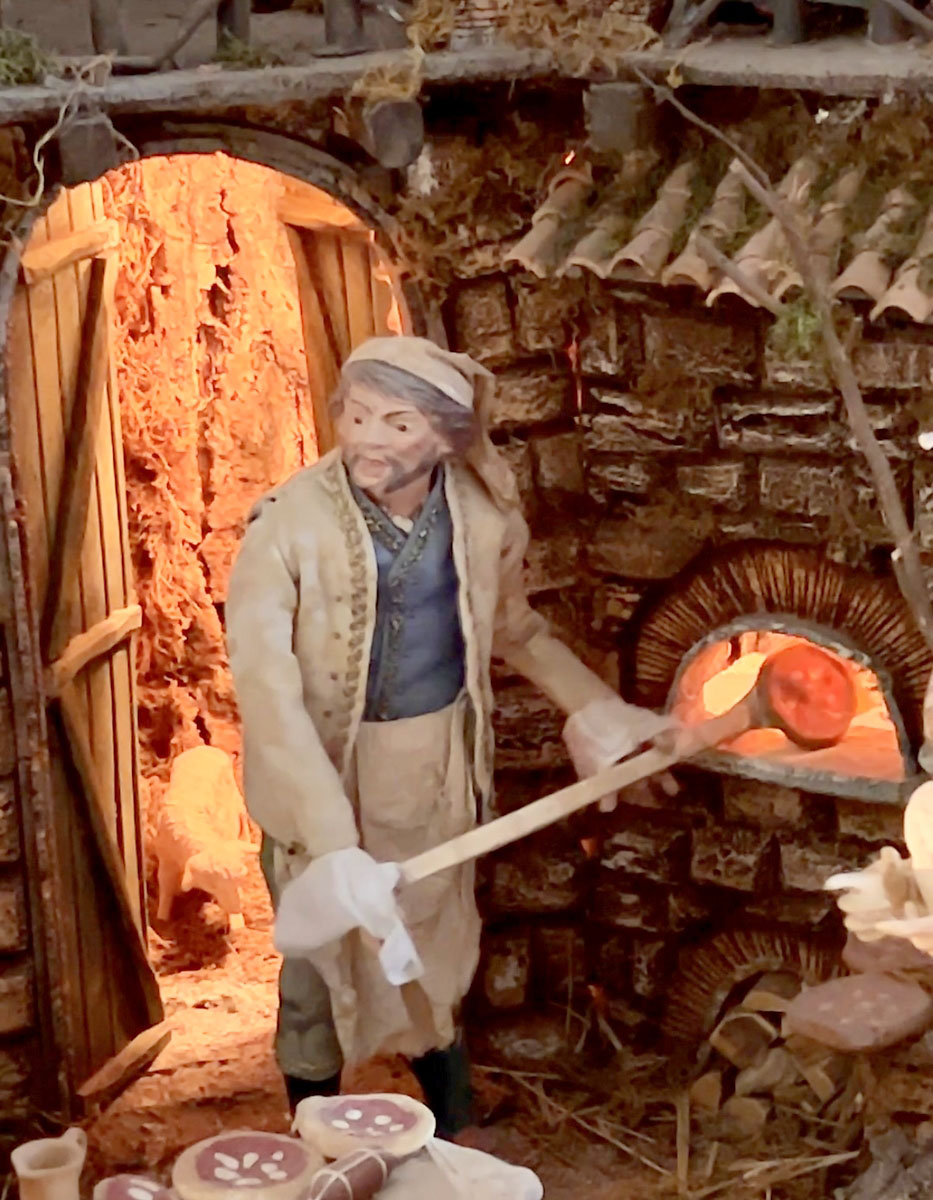
In the 1700’s the Naples citizens added their unique spin, which was not the creation of a typical Bethlehem landscape but that of a typical Southern Italian village, complete with housekeeper, carpenter, pizza chef, butcher, and to keep it real; the town drunk known as Benito, drinking a glass of wine near the birth site.
It is a typically accepted notion here that Jesus was born among these humble folk and was a citizen of the community. In contrast, during the Baroque period of extreme wealth in Naples, upper society often competed with each other for the most elaborate representations.
Neapolitans build their singular presepe on December 8th, the feast day of the Immaculate Conception, and keep it up through Epiphany (January 6th) in homes and churches to celebrate these Catholic holidays. But year-round you can view these scenes along a narrow road known as the Via de Presepi.
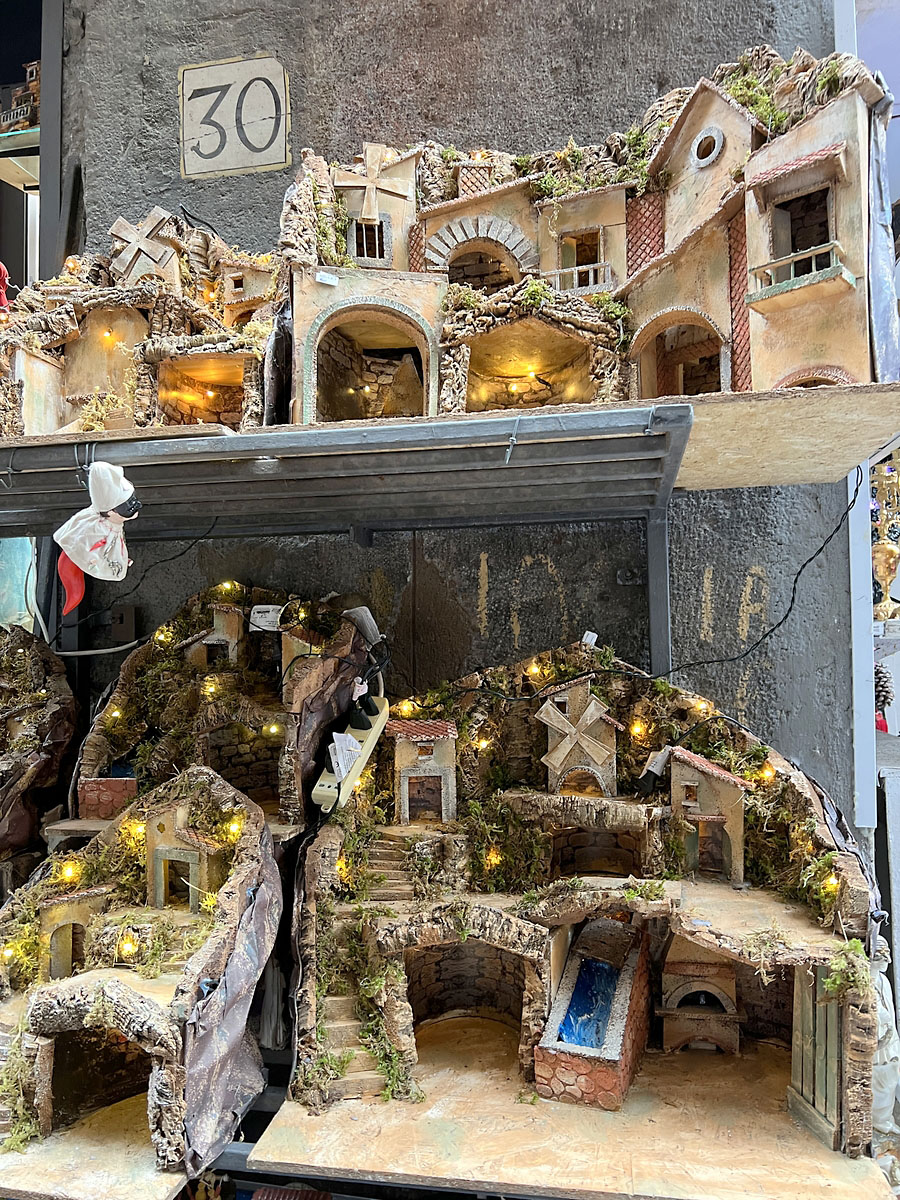
Shops and artisan workshops line this street trying to outdo each other with elaborate celebrity figurines, artistic pieces with moving parts and every interpretation of the cornetto, the red Italian horn.
Nearby, you can view the Sezione Presepiale, a rare nativity display from the 18th and 19th centuries housed in the Certosa e Museo di San Marino, a former monastery turned museum residing at the top of Naples Bay. Unfortunately, it was closed while I was there.
Using wood, terracotta and resi,n these figures depict not only the typical holy scene but entire villages with markets and taverns. There may even be a barn, cave or stable included. Each in itself is a work of art.
Many use special effects such as fountains, mills with running water, lights and fires. And each one can contain many symbols.
For example, placed hunters and fishermen represent life and death. Depicted merchants represent particular months, such as a butcher for January and a baker for June. The largest one on display during my time in Naples was at the San Lorenzo Maggiore. Set up in one of the cloisters, this presepe featured a baker, a washerwoman, and the drunk Benito and was set up in a cave setting.
Whether you celebrate the religious meaning of Christmas or not, you can still appreciate the history, artistic flair, and the Italian influence of the presepi, still considered the earliest nativity scene ever created. Buon Natale or Merry Christmas!


